What is Product Drying?
The product drying process involves the removal of free moisture, hygroscopic moisture, or a combination of both. Free moisture is water held on the surface and hygroscopic moisture is water between molecules of a substance.
Free moisture occurs when actual liquid water is used to mix or wash the product prior to drying. Hygroscopic moisture will take up or dispel water in relation to the relative humidity of the which it is exposed. Any hygroscopic material when exposed to 100% RH humidity, it is fully saturated.
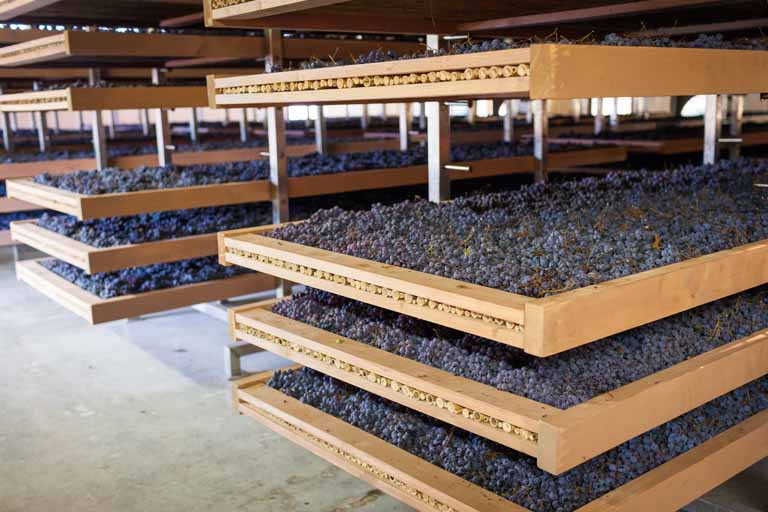
Grape Drying
Grapes are dried to produce raisins or kishmish (as commonly known in India). There are four primary methods for producing raisins:
- Traditional natural drying
- Dehydration
- Continuous tray
- Dried-on-the-vine methods
The most popular and commonly used method is natural drying. However, grape-drying dehumidifiers can help maintain controlled humidity and support faster, more consistent drying.
The natural drying process depends on the environment’s humidity and temperature. As a result of humid conditions, drying may not be achieved within the desired time period. High humidity can also affect output quality.
Problems
The natural drying process depends upon the humidity & temperature level of the environment. As a result of humid conditions, drying cannot be achieved within the desired time period. High humidity also affects the quality of the output.
Our Solution
The drying rate can increase significantly by maintaining relative humidity (RH) at 25% and temperature at approximately 35°C. TDS provides desiccant-based dehumidifiers for grape drying on rent, supported by technical manpower to help achieve these drying conditions.
This can help reduce drying time, improve process efficiency, and support product quality.
Kattha Drying
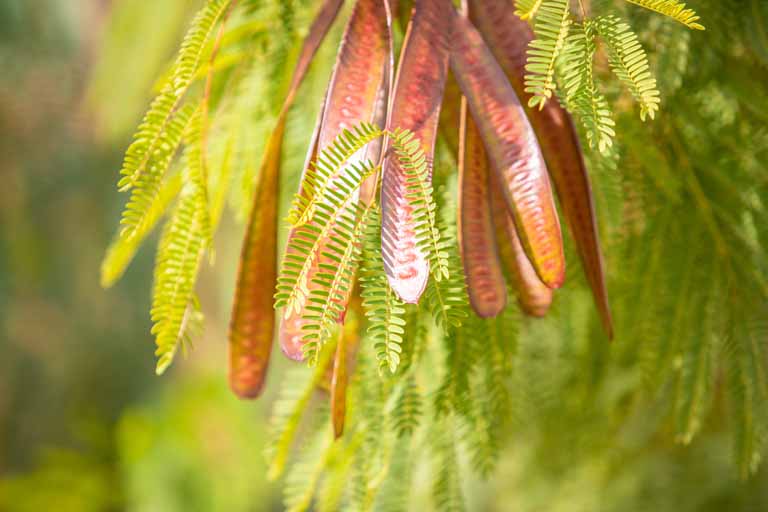
Kattha is an extract derived from the hardwood of khair (Acacia catechu) by boiling. It is a clay-coloured crystalline substance used in the preparation of “pan,” a chewing material popular in Asia and East Africa. Katha is dried by the cold room drying process. The moisture levels are reduced from typically above 50% to about 12-15%. The temperature in the cold room is maintained at slightly above 0ºC, throughout the processing time. However, the process takes a long period of about 24 days.
Problems
Natural process drying depends upon the humidity and temperature level of the environment as a result of which during humid conditions, drying cannot be achieved within the desired time period. High humidity also affects the quality of the output.
Our Solution
TDS provides desiccant based Dehumidifiers on rent supported by our technical manpower to achieve the desired RH level of 12-15%. Low pressure drying techniques can reduce the product drying period substantially. Kattha being a high priced product, shortening of process time results in substantial savings.
Spice Drying
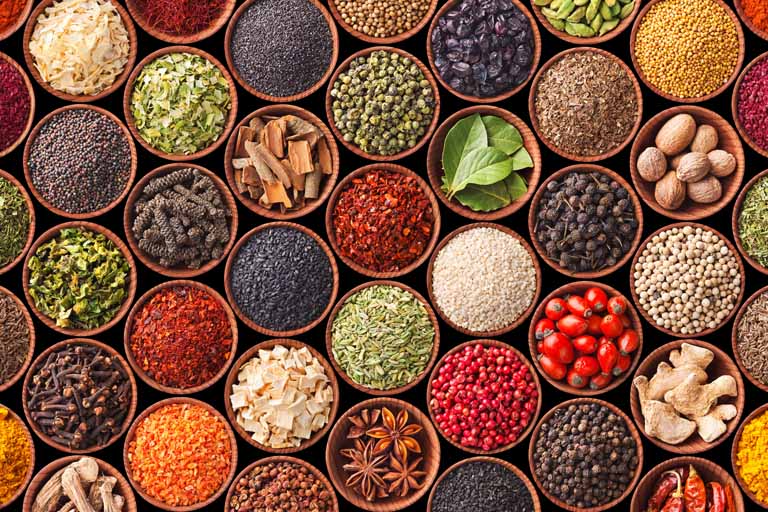
Spices have been dried throughout history. Spices are hygroscopic in nature and tend to absorb moisture from the air, so drying is required to extract unwanted moisture.A dehumidifier for spice drying helps maintain controlled low-humidity conditions, supporting efficient moisture removal while helping preserve the quality of the spices.
Problems
As spices are highly hygroscopic in nature, they tend to absorb moisture from the air. This absorbed moisture leads to a loss of flavour, aroma, colour, and freshness. Once spices are dried and powdered, they can absorb moisture from the surrounding air during packaging and storage, causing them to become sticky.
This inhibits their free flow through the packaging machine. The damp powder also sticks to the wrapping paper, slowing the packaging process and creating hygiene issues. Moisture not only creates operational problems but also reduces the shelf life of the product. Inadequate drying also promotes the growth of mould and fungus.
Our Solution
Technical Drying Services (TDS) provides product drying services with the help of desiccant-based dehumidifiers for spice drying applications.
Dehumidification in packaging and storage areas helps maintain a dry environment, allowing production and packaging equipment to operate effectively.
It can also help retain the flavour, aroma and freshness of spices while reducing caking and lumping.
The desiccant-based dehumidifier removes moisture from the air through chemical attraction rather than condensation. Humid air is directed across a desiccant material that acts as a drying agent, absorbing the moisture.
A second hot-air stream then regenerates the moist desiccant by heating it and releasing the trapped moisture.
The regenerated desiccant is reused to provide a continuous supply of dry air. In this continuous process, the air is dehumidified while the desiccant is simultaneously regenerated, ensuring uninterrupted availability of dry air for efficient spice drying operations.
Specific relative humidity level needs to be maintained for different spices:
| Spice | RH (%) | Temperature °C |
|---|---|---|
|
Cardamom |
30 – 35% |
28°C |
|
Dry Onion |
50 – 55% |
10 – 20°C |
|
Cinnamon |
40% |
15°C |
|
Chillies |
18 – 20% |
45 – 50°C |
The main USP of TDS services is that it provides highly qualified technical manpower along with all the required equipment. As the service is provided on rental basis it can be availed whenever required.
Key Installations
Chilli Drying, ITC
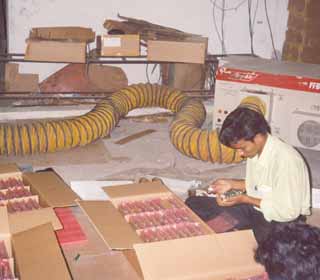
Spice Drying, ITC
Frequently Asked Questions
Product drying services on rent provide temporary drying solutions using dehumidification equipment to control moisture and relative humidity. These Product Drying Services on Rent can help reduce drying time and maintain suitable conditions for applications such as food, spices, grapes, and other moisture-sensitive products.
A dehumidifier for spice drying removes excess moisture from the surrounding air, helping prevent dried spices from reabsorbing moisture during drying, packaging, and storage. Controlled humidity can also help reduce caking, lumping, mould growth, and loss of flavour, aroma, and freshness.
Dehumidifiers for Grape Drying help maintain controlled relative humidity around the grapes, allowing moisture to be removed more consistently than under naturally humid conditions. Maintaining suitable drying conditions can reduce drying time and help improve the quality of raisins or kishmish.
Yes. TDS Asia provides desiccant-based dehumidification solutions on rent for different product drying requirements. Its technical team can help establish suitable humidity conditions for applications such as grape, spice, and other product drying processes, depending on the required drying conditions.