Overview
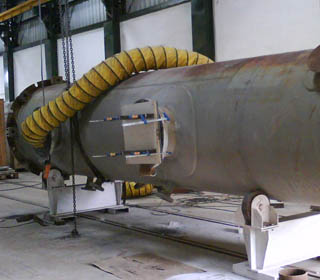
Climate control is critical during blasting, painting, and coating jobs in tanks, bullets, columns, reactors, coke drums, vessels, pipelines, etc. To ensure this, you can find a dehumidifier for rent and combat high relative humidity that causes condensation on the metal surface, resulting in coating-related problems like blooming or flash rust. An adequately designed and applied dehumidification system during blasting, painting, and coating operations will ensure that the RH inside the tank is maintained as per the technical specification, for optimum performance of the coating/painting to enable timely completion of the project.
- Poor surface preparation, as a result of uncontrolled environmental conditions leads to blistering, cracking, peeling and cratering on the surface. This results in improper adhesion between the substrate and the coating.
- High relative humidity causes condensation on the metal surface which results in corrosion. Unfavourable environment during a coating application could cause blister and crater which may lead to coating failure. It is crucial that the temperature, relative humidity, and dew points are as per technical specifications. Industrial coatings require a clean and stable environment where the correct temperature and humidity conditions are favourable.
Solution
Maintain temperature, relative humidity, and dew points are as per technical specifications. Moisture levels should be controlled inside the tanks to increase the coating life. Maintain relative humidity inside the tank at <55% and temperature between 30ºC-35ºC.
Why Dew Point Matters During Coating
When the temperature of the steel surface approaches or falls below the dew point of the surrounding air, moisture can condense on the surface.
That moisture can interfere with surface preparation and coating application, contributing to flash rust, poor adhesion and premature coating failure.
TDS controls the environment to maintain the required relationship between:
Air temperature → Relative humidity → Dew point → Steel surface temperature
The TDS source specifically identifies condensation when the steel surface reaches or falls below dew point as a coating problem.
TDS Solution
- Assure good quality coatings and meeting paint manufacturer specifications
- Enables the blast, clean, and coat cycle to be done at any time of the year regardless of ambient conditions
- Enables the contractor to reduce the project time by up to 35%
- Enables the owner to reliably predict the downtime of tank
- Increases the life of the coating
How TDS does it?
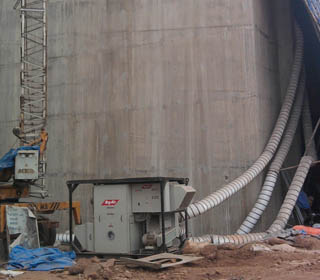
An adequately designed dehumidification system is used during blasting, painting and coating jobs to ensure the following:
- RH inside the tank should be less than 55% during the entire period of blasting and coating, including night time.
- Maintain a -5°C dew point differential between the air and surface temperature of the steel surface to be coated.
- Maintain a -12°C dew point differential between the air inside and the air outside the tank.
- Maintain a relative humidity of the surrounding air below 55%
Benefits
- Increase in coating & paint life by 1.5 – 2 times
- Prevention of rust bloom, blistering and curing failures
- Delivers specified temperature and RH conditions
- Achieves RH levels sufficient to hold the blast and prevent rust
- Improves the addition of paint on steel surface
- Maintenance job can be done continuously without any interruption which results in decrease in downtime
Climate Control for Blasting, Painting
and Coating
Key Installations
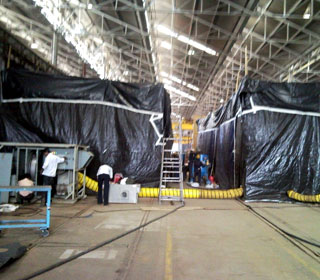
Godrej, Mumbai
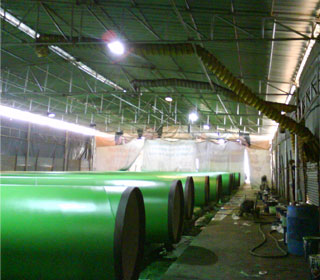
Kirloskar, Pune
Frequently Asked Questions
Uncontrolled temperature and humidity during blasting, painting, and coating can lead to condensation, flash rust, blistering, cracking, peeling, cratering, and poor coating adhesion. Maintaining suitable environmental conditions helps support proper surface preparation and coating performance.
Dehumidification for blasting painting coating removes moisture from enclosed areas such as tanks, vessels, reactors, and pipelines. It helps maintain the required relative humidity and prevents moisture from accumulating on prepared metal surfaces during blasting and coating operations.
Dew point control helps determine whether moisture is likely to condense on a prepared steel surface. Maintaining the required temperature difference between the steel and surrounding air helps prevent condensation and supports proper coating application and curing.
TDS Asia provides climate control for surface preparation and coating using desiccant-based dehumidifiers, condensing units, blowers, and related equipment. These systems help control humidity, temperature, and dew point during blasting, painting, and coating projects, including work inside enclosed structures.